
Library & Special Collections
The Kinsey Institute Collections encompass print materials, film and video, fine art, artifacts, photography, and archives. The Institute has collected publications, objects, art, and data from six continents. Its holding span more than 2,000 years of human history, and run the gamut of technologies—from ink on paper, to microforms and CD-ROMs.
Search the Kinsey Library Catalog Fellowships and awards are available >>Kinsey Institute Library & Special Collections Reading Room
Location: Lindley Hall, 150 S Woodlawn Ave
Hours: Monday - Friday, 10am-4pm by appointment.
For appointments and other inquiries, please contact libknsy@indiana.edu.
*Please note that the Library & Reading Room will be closed November 20 - 24 and December 18 - January 5 for IU Thanksgiving and Winter Holiday breaks.
"A sex library, unlike a library in any other subject, must draw material from a diversity of fields. Not only must biology, medicine, psychology, psychiatry, and other sciences be represented, but also material from purely literary sources, from the Classics, from modern fiction, from poetry, from art, from law, from religious literature, and from many other fields."
- Dr. Alfred Kinsey
History of the Collections
The Kinsey Institute's research collections owe their origins to Dr. Kinsey's 1938 course on "Marriage and Family" at Indiana University. In preparation for teaching, Dr. Kinsey began collecting books and articles related to all facets of sex—both to fill in the gaps in his own knowledge, and to gain a broad understanding of the existing literature.
Dr. Kinsey's research collection expanded to include artifacts, photographs, films, and art—all in service of better understanding human sexual behavior around the world and throughout history. By 1947, when the institute was founded as the Institute for Sex Research (ISR), it was the largest collection of sex-related materials in the world, and Dr. Kinsey sold it to the fledgling institution for $1, providing the core around which the current collections have grown.
Explore Our Collections
Archival collections and projects
The archives contain correspondence, manuscripts, unpublished materials and more, available for scholarly research. Among the archival collections are the papers of Dr. Alfred Kinsey and the records of the Institute as well as papers of Masters & Johnson, John Money, Harry Benjamin, and Thomas N. Painter, and the institutional records of the Society for the Scientific Study of Sexuality, the Albert Ellis archives, and the EROS magazine collection.
Browse the archival collections & projects
Art and artifacts collection
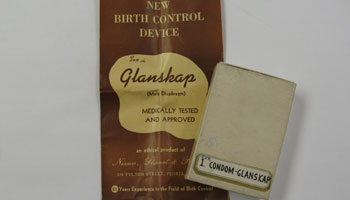
The Kinsey Institute art and artifact collection contains approximately 7,000 items from the United States, Europe, South America, Africa, and Asia, and spans more than 2,000 years of human history.
Photography collection
The Kinsey Institute photography collection contains more than 80,000 prints and negatives dating from the 1850s to the present. Most of these photographs were produced in the United States, Europe (Britain, France, Germany, Italy), and Asia (Japan, China).
Explore the art, artifact & photography collections
Film archive
The Kinsey Institute film archive consists of approximately 8000 film titles ranging in date from 1915 through the 1970s. The collections contain a variety of formats including super 8, 8mm, 16mm and 35mm. The collections are grouped into the following categories: Historical Stag films; Peepshow; Sex Education; Animal Sex Behavior; Swedish Erotica and Art, Exploitation, and Pornographic feature films.
Video collection
The Kinsey Institute video collection consists of approximately 4000 titles ranging in date from 1970 through today. The collection contains a variety of formats including beta, videocassette and digital video disc. These videos cover the following areas: Heterosexual and Homosexual Erotica, Sex Education and Therapy, Transgender, and Sadomasochism/Bondage.
Digital Resources
Resources available online from the Kinsey Institute Library & Special Collections include archival databases, full texts, lecture and symposium recordings, and virtual art exhibitions.
The Kinsey Institute Library
Any qualified researcher may request access, including Indiana University students and faculty, as well as non-affiliated scholars and professionals. Researchers must be at least 18 years old and have demonstrable research needs related to human sexuality, gender, and reproduction.
Plan your research trip
The Kinsey Institute Library is open Monday to Friday 10am - 4pm by appointment. We are closed for major holidays.
Users who have up-to-date registration forms on file may access the library during scheduled hours. First-time users must have appropriate documentation with them. Please see the Library Policies for information on registering.
Access to special collections
The Institute's archival, art and artifact, photography, and film/video collections are available only by appointment and are closed the same holidays as the library. Selected items are available online. Please contact library staff for more information or to schedule your visit.
Policies
Prior to your visit, please review the Kinsey Institute Library's policies, which address application requirements, materials access, restrictions, and other guidelines.
Make arrangements
Please contact the library in advance of your visit to confirm admittance, dates and times of visits, and collection use. Note: Some materials are stored off-site, while others are restricted.
Accommodations
Visit Bloomington provides up-to-date information about campus-area hotels, ground transportation, and parking.
Support Kinsey
Sexuality and intimate relationships are essential to our individual and collective well-being. Your support will help the Kinsey Institute advance research and education in the science of love, sexuality, gender, and sexual health, and give a diverse field of researchers the resources they need to make new discoveries.
Pledge your support